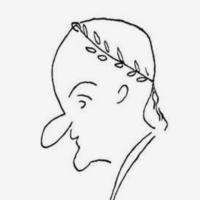
Подумалось, как бы эта фраза звучала с другой стороны. Результат совместного творчества с нечеловеческим разумом:
Phoenician formulation modeled on Ceterum censeo
Phrase
- Phoenician: 𐤅𐤏𐤃 𐤀𐤍𐤊 𐤇𐤔𐤁 𐤓𐤅𐤌 𐤕𐤀𐤁𐤃
- Transliteration: wʿd ʾanok ḥošeb Rōm teʾbad
- Sense: “Furthermore, I judge that Rome shall perish” / “Furthermore, I hold that Rome is to perish.”
Grammar analysis
- 𐤅𐤏𐤃 (wʿd) — conjunction plus adverb, “and furthermore” or “moreover,” used here as the nearest Phoenician equivalent to Latin ceterum.
- 𐤀𐤍𐤊 (ʾanok) — independent first-person singular pronoun, “I.” Its inclusion adds rhetorical emphasis.
- 𐤇𐤔𐤁 (ḥšb) — verb “to think, reckon, judge, consider,” functioning as the equivalent of Latin censeo.
- 𐤓𐤅𐤌 (Rōm) — “Rome,” treated as feminine singular, as is normal for city names in Semitic usage.
- 𐤕𐤀𐤁𐤃 (teʾbad) — prefix-conjugation imperfect, third-person feminine singular, from the root ʾ-b-d “to perish, be destroyed.” In this context it carries a future or modal force: “shall perish,” “is to perish,” or “ought to perish.”
Note on syntax
Phoenician does not have a direct equivalent of the Latin gerundive in delenda est. The closest idiomatic strategy is to use a verb of judgment such as ḥšb followed by an imperfect form like teʾbad, which gives the clause a prospective and programmatic force rather than a past or resultative sense.
Comments (4)
Похоже на иврит
По дизайну должно быть похоже. Я в семитских языках ни бельмеса
Да, тоже семитский язык. И тот же алфавит использует.